Room: Sport News Android
JackpotCity Online
Sport News ANDROID 5
It’s now nine-years-and-counting in the top spot for the U.S., which has held the No. 1 ranking since winning the 2010 world championship. World Cup champion Spain stayed No. 2, Australia leaped eight spots to No. 3, World Cup finalist Argentina rose one spot to No. 4 and World Cup bronze-medalist France fell two slots to No. 5.
FIBA’s rankings take results from the most recent eight years into account — which means the U.S. is still reaping point benefits from the 2012 and 2016 Olympic gold medals and the 2014 World Cup title.
“In this day and age, basketball in other countries is not a secret,” U.S. coach Gregg Popovich said after the Americans completed their run in the World Cup. “So it’s not like there’s an epiphany or a revelation to be made. There are wonderful teams and wonderful coaches all over the world. You go compete and the best teams win.”
It’s now expected that the U.S. will retain the No. 1 ranking going into the 2020 Tokyo Olympics. Several top NBA players, including Stephen Curry, Draymond Green and Damian Lillard have said in recent days that they intend to play for the U.S. in Tokyo, where the Americans will try to win a fourth consecutive gold medal.
Most top U.S. players declined to be part of the World Cup team.
“I’m expecting them to be so strong next year,” Spain coach Sergio Scariolo said.
OLYMPIC UPDATE
The new rankings confirmed that European champion Slovenia, which didn’t earn a spot in the World Cup field after many of its top players couldn’t take part in qualifying since those games conflicted with the NBA and Euroleague schedules, will still have a chance to compete in the Olympics — as will seven other teams that found out they’re headed to playoffs next year.
Angola, Senegal, Mexico, Uruguay, China, Korea and Croatia also still have Olympic hopes. Those last eight playoff spots awarded Thursday went to the top two teams from Africa, Europe, Asia-Oceania and the Americas regions who hadn’t either already clinched Olympic berths or spots in the last-chance playoffs.
Japan is automatically qualified for the 12-team Olympic tournament as the host country. The U.S., Argentina, Nigeria, Spain, France, Iran and Australia clinched Olympic spots at the World Cup by finishing as the best teams in their respective FIBA regions — the Americas, Africa, Europe, Asia and Oceania.
That leaves four unclaimed Olympic berths, and 24 teams to compete for them in playoffs next year. There will be four six-team tournaments held from June 23-28, 2020 — winner-take-all, all in this case meaning an Olympic berth. Bidding for sites is expected to begin shortly, FIBA said.
The other 16 playoff spots were awarded based on World Cup placing. They went to Serbia, Lithuania, Greece, Russia, Brazil, Italy, Puerto Rico, Turkey, the Dominican Republic, Venezuela, Germany, Canada, the Czech Republic, Poland, New Zealand and Tunisia.
MOVING UP
Belize was the top mover in the new rankings, climbing 50 spots to No. 118. Kosovo rose 21 spots to No. 69, Togo went up 21 spots to No. 136, Tunisia climbed 18 spots to No. 33 and Ivory Coast went up 16 spots to No. 48.
STILL SWEEPING
FIBA has four sets of rankings — for men, women, boys and girls. The U.S. holds the No. 1 spot in all four of those rankings, though the race is tightest among the men.
The U.S. men hold a lead of 54.9 points over Spain in those rankings, while the rankings margins held by the U.S. women (310 points over No. 2 Spain), boys (291 points over No. 2 Canada) and girls (155 points over No. 2 Spain) are far more comfortable.
Sport News ANDROID 4
Sebastian Vettel has admitted he is not happy with his driving but is confident he can turn his form around before the end of the season.
The four-time world champion made the latest in a string of high-profile errors at the last race in Italy, when he spun and then collided with another car while rejoining.
Vettel said: “I take it as what it is and it is obviously not great but also not a disaster. It’s not the level I want to perform at but these things can happen to all of us now and again.”
The German has been making major driving errors at a rate of about one in every three races since the French Grand Prix in June 2018.
And this year the pressure has increased on the 32-year-old as a result of the arrival of Charles Leclerc as his team-mate at Ferrari.
The 21-year-old from Monaco has won the last two races, while Vettel’s last win was in Belgium in August 2020.
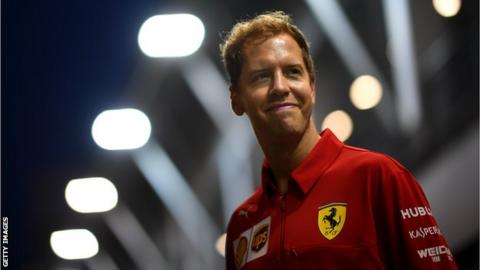
- Haas choose Grosjean over Hulkenberg
- Singapore Grand Prix preview
- Singapore GP radio & online coverage details
Vettel denied that his issues, which are a major talking point within in F1, were psychological.
“I don’t think it’s mental,” he said. “It’s not that I am in the wrong place [in my mind]. I am doing the right things, which is why I think it’s crucial not to over-complicate things too much, and pull through it.
“Here and there I might not have the absolute trust in the car or the best feeling yet. But it’s improving my understanding of the car and then it’s a question of details, lining them up.
“Hopefully sooner rather than later it will click and things will start to fall into place. Until then we need to keep our head down. There are always things I can do better and learn. We see how the next few races go.”
Leclerc has out-qualified Vettel for the last seven races in a row, although some of them have involved extenuating circumstances. And on average qualifying pace, Leclerc is 0.132 seconds quicker than Vettel over the 14 races so far this season.
Vettel said: “First you need to be fair and say he is very quick. [There were] some sessions where I didn’t take part – Austria and Germany. Monza only half. I don’t think there is anything in particular standing out. If he out-qualifies me he has done a better job but then you have to look at the reasons why.”
Ferrari are expecting a more difficult weekend in Singapore, where the tight and twisty nature of the Marina Bay street circuit does not suit their car, and they expect to struggle to compete with Mercedes and Red Bull.
Leclerc said: “It might be a bit more difficult for us this weekend. Quite a lot of corners, a lot less straights. We are going to struggle a bit more but anything is possible everywhere and we see how it goes.”
Mercedes driver Lewis Hamilton enters the weekend aiming to take another step towards his sixth world title.
The Briton, whose last win was in Hungary at the beginning of August, is 65 points ahead of team-mate Valtteri Bottas in the championship.
Sport News ANDROID 3
At the press launch of a TV series about himself last week, Sergio Ramos joked with journalists: “I have more seasons now with Amazon than I do with Real Madrid.”
The Spain centre-back has two years left on his contract at the Bernabeu but his club are not looking to renew it.
And while Ramos has been a constant presence at Real for 14 years, the uncertainty surrounding his future only adds to the increasing sense of instability around a club which has won four of the past six Champions Leagues.
Since Zinedine Zidane returned as manager towards the end of last season, his win percentage is below 50% and there has been little to suggest improvement since the start of this season.
Real still look unsettled and they are still inconsistent, worrying signs as they enter a two week-period which started with Champions League defeat to Paris St-Germain, followed by matches against leaders Atletico Madrid and Champions League qualifiers Sevilla in La Liga.
Moments such as these are nothing new at Real Madrid, a perennial soap opera providing tales of conspiracy, intrigue and passion and never failing to serve up one cliff-hanger after another, both on and off the pitch.
But as Europe’s perennial winners started their latest European campaign with defeat, is Zidane struggling to make the impact this time around, and is there a danger the Frenchman might not even be there come the next Champions League final?

Never go back? Zidane struggling to inspire on his return
Zidane wrote himself out of the Real Madrid storyline when he quit after somehow winning the Champions League at the end of the 2017-18 season – his third title in a row. He felt there were big changes to make at the club and that he was not going to receive the backing he needed to implement them.
He might have chosen this time of self-imposed footballing exile as an opportunity to reflect on a fine career as both a player and a coach. He probably didn’t come across the words of poet Felix Dennis:
Never go back. Never go back.
Never surrender the future you’ve earned.
Keep to the track, to the beaten track.
Never return to the bridges you burned.
Nor did he take similar advice from people close to him. In March, he returned at the request of president Florentino Perez, who had previously tried to entice Mauricio Pochettino from Tottenham and the unemployed former Chelsea manager Antonio Conte.
Zidane took the job before the end of last season because they told him that, if he didn’t, Jose Mourinho would be the chosen one (more on that later). He was also promised he would be a major player in deciding who came in and who left. And that there would be plenty of changes.
There needed to be. Zidane’s last Champions League success flattered to deceive in a season when his side finished 17 points behind La Liga winners Barcelona.
But things have not improved. Since coming back, he has won seven of 15 league games, a win rate of 46.7%. Santiago Solari, the man he replaced, won 22 out of 32 games in charge, a win rate of 68.8%. That was significantly higher than Zidane’s but not high enough to earn the president’s confidence and the Argentine was dismissed after just four and a half months.
Key injuries to vital players such as Marco Asensio and Eden Hazard, a summer signing who found himself sidelined before kicking a ball for the club, have played their part in the lacklustre start.
But so have Zidane’s changeable tactics.
Only left-back Ferland Mendy, who joined from Lyon, looks to have hit the ground running. Luka Jovic – who arrived from Eintracht Frankfurt, where he was scoring for fun – has not looked like he has the quality to be an automatic starter. At least not in the opinion of Zidane, who has started him only once and then replaced him with midfielder Luka Modric after 68 minutes.
Real also signed some youngsters for big money – Eder Militao, 21, (£42.7m from Porto) and 18-year-old forward Rodrygo (£40.2m from Santos). The latter has been injured since pre-season, while the former has yet to feature.
Why Zidane appears to be losing his trump card
Zidane has never been considered a footballing Einstein as a coach, but his trump card at Real Madrid has always been the relationship he has enjoyed with his players. It is perceived by many as a rosy, peaceful, harmonious co-existence.
But there are signs those relationships are crumbling.
In deciding who should stay and who should go, the 47-year-old has not endeared himself to many of the Madrid faithful. They will see the sale to Atletico of Marcos Llorente, the nephew of the great Gento and a Blanco to the bone, as a sort of betrayal.
They will also be unimpressed with the loaning out to Sevilla of Reguilon, another product of the La Fabrica academy who could have slotted into the position held by Marcelo, who was 11kg over his optimum weight last season and has been struggling on that front ever since. And then there was the loan departure of Dani Ceballos, who could certainly be doing a job for the club in midfield, to Arsenal.
Zidane’s obsession with bringing in compatriot Paul Pogba has not been pretty to witness, not least because Manchester United never had any intention of selling him and Perez never seemed that keen on actually buying the 26-year-old.
The club had agreed terms with Tottenham’s Christian Eriksen and Ajax’s Donny van de Beek, but Zidane stopped the moves because Pogba was the midfielder he wanted.
The reality is that Zidane and the club were hoping to sell Isco, Gareth Bale and James Rodriguez, but no offers were forthcoming. For many, his use of those players is little more than a stick he is using to beat the president with by saying, basically: “You didn’t get me the player I wanted so now I’m going to have to use the players you wanted.”
Bizarrely, Bale’s lack of rapport with the manager has provoked precisely the kind of reaction that Zidane would have hoped for, with the Wales forward putting in some “I’ll show you” performances that have brought him two goals and one assist in three games. The downside is that it has also earned him a red card – thanks to two yellows collected in less than two minutes – and a one-match ban.
And finally, the club’s decision to sell goalkeeper Keylor Navas to Paris St-Germain was never something Zidane wanted either.
The general opinion at the Bernabeu is that the relationship between Zidane and Perez is not the best. A division between them is being created by their differences on Pogba and Navas, by the club’s failure to get rid of players the Frenchman did not want, and by the confusion over tactics – with the team lining up for one game with three at the back, the next in a 4-3-3 set-up and another as a 4-4-2.
Perez is frustrated at the lack of game time for some big-money signings and, for the first time in a while, the president feels he is not in complete control and the manager is not doing as he would like.
Zidane cannot be happy either, now finding himself with a squad of veterans combined with players untried at this level.
As a consequence, the Madrid media close to Perez are beginning to make mischief with criticisms of the coach.
When that happens, Zidane should know drastic things can happen.
Mourinho waiting in the wings
The name of Mourinho, who has rejected at least one big offer from China, has inevitably re-emerged in relation to the Real job.
Around the end of 2015, just as Rafael Benitez was struggling to win hearts and minds at the Bernabeu and before Mourinho joined Manchester United, Perez spoke to him with a view to discussing a return to the club.
Iker Casillas, one of the previous thorns in the side of the prickly Portuguese coach, was already gone. The goalkeeper was a sacrificial lamb, unceremoniously given away to Porto after a career that had, until then, been dedicated to two sides – his club and his country.
Only two problems remained: Cristiano Ronaldo and Ramos, the two players Mourinho blamed for his departure from Madrid.
Get rid of them, he told Perez, and we can talk.
Ronaldo is now at Juventus. One down, one to go.
I would not wager much on Ramos receiving a contract extension any time soon.
Sport News ANDROID 2
Sportswriters occasionally claim the headline, written by someone else on the paper, has mis-sold their words.
New Zealand rugby journalist Chris Rattue could have no such complaint.
“Just give us the World Cup now” ran a front-page plug for his piece in the New Zealand Herald.
Turn inside to the sport section and his opening line told readers “it’s time to jump the gun”.
He added: “They might as well hand over the Webb Ellis Cup now, with the All Blacks looking this good.”
- New Zealand pick Barrett at full-back to face Springboks
And on that day – Sunday, 26 August 2018 – no-one could have had many complaints about it either.
Mercurial fly-half Beauden Barrett had just scored four tries in a thumping 40-12 win over Australia.
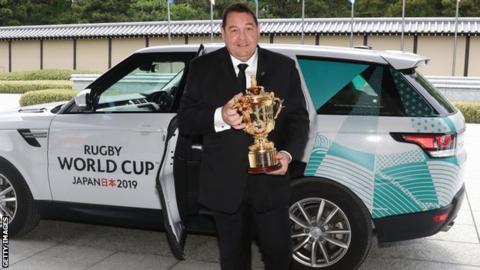
Beauden Barrett slides in for one of his four tries in August 2018’s win over Australia
The victory meant that, since winning their second successive Rugby World Cup in the autumn of 2015, New Zealand had lost just three of the following 33 Tests.
The total domination of world rugby showed no sign of ending and there was no reason to think it would not extend to Japan 2019 and a third straight world crown.
But, with their opening pool match and a potential final dress rehearsal against second-favourites South Africa looming, things are not quite so certain.
The end of an era?
In August this year another article appeared, this time on the other side of the Tasman Sea after a very different Bledisloe Cup result.
Sydney-based newspaper The Australian fed images of All Blacks Sonny Bill Williams, Sam Whitelock and Kieran Read into the viral Faceapp tool, putting another 40 years on the 30-plus All Black mainstays.
The dig at the ‘Old Blacks’ sprung from the Wallabies’ record 47-26 win over a 14-man New Zealand in Perth a few days earlier.
The game before that, New Zealand had been held to a 16-16 draw on home turf by a resurgent South Africa. Nine months previously, they had been squeezed out by a relentless Ireland side in Dublin, going down 16-9.
As a result of those defeats, for what they are worth, World Rugby’s own rankings rate Ireland as the world’s best team heading into the tournament, as first Wales and now Joe Schmidt’s side ended the All Blacks’ near-decade long hold on top spot.
So is this the end of an era? Or just a false dawn for their chasing rivals?
Ominously Colin Slade, a member of those successful squads in 2011 and 2015 who now plays his club rugby with French side Pau, believes the recent taste of adversity could sharpen the All Blacks’ appetite for more World Cup glory.
“I think that defeat in Perth, especially, might be a good thing as a bit of a wake-up call, a reminder that everyone is beatable on their day,” he told BBC Sport.
“I think a lot of people tend to push the panic button really early and read a lot into things, especially with the All Blacks.
“One bad performance and everyone is led to believe the wheels are off the wagon.
| New Zealand’s possible route to the final (based on results going with current world rankings) | |
|---|---|
| Pool | South Africa |
| Pool | Canada |
| Pool | Namibia |
| Pool | Italy |
| QF | Scotland |
| SF | England |
| Final | Ireland |
“Heading into 2015, we weren’t beating everyone comfortably but we had experience and belief on the mental side of the game.
“That is something head coach Steve Hansen has preached since before 2011 and has installed in every new player who comes into the squad – when times get tough, you have to switch up mentally, remain calm and focus on performing your job for the team.”
The missing men
There are several things they are missing when compared to four years ago however; Dan Carter, Ma’a Nonu and Richie McCaw for a start.
The decorated trio all bowed out of international rugby with the final win over Australia at Twickenham.
The vacuum has been filled with discussion.
While the 2015 side almost named itself, head coach Hansen’s choices in Japan are more tricky.
“I don’t think they are as stable as they were in 2011 or 2015,” Northampton director of rugby, former Hurricanes coach and New Zealander Chris Boyd told BBC Sport.
“Those two teams were in concrete two years out.
“They understood the game they were playing, the players who were playing 1-15 knew who they were, the players 16-23 knew who they were and the guys outside the 23 knew who they were and they all had their roles.
“I think in the current side they are still ‘fishing’ because of injury, loss of form, unavailability and some guys putting their hands up.”
Barrett is perhaps the first name on the team-sheet. But, with Hansen keen to deploy two playmakers in his XV, the question is where he fits in.
In the autumn, livewire Damian McKenzie shared the responsibility from full-back.
But his serious knee injury has forced a rethink and a re-jig, with Crusaders’ Richie Mo’unga brought in at fly-half and Barrett switching to full-back.
“I like and understand the logic of having two playmakers on the field, that can help a lot,” said Slade.
“‘Beaudie’ is a class act, needs to be on the field, and will be.
“Damian McKenzie is potentially a big loss, but the way Richie is going, he may have forced his way in there somehow.
“What Steve is going to do now is balance the make-up of the rest of the team and he will have some games in the pool to figure out his best combination.”
The ghosts of World Cups past
As Hansen tinkers with the chemistry in his line-up in the early stages, New Zealand hope to be handing out lessons on recent history by the end of the tournament.
While they have dominated the last two editions of the Rugby World Cup, their relationship with the game’s showpiece is complicated bordering on tortuous.
| New Zealand at the Rugby World Cup | |
|---|---|
| 1987 | Winners |
| 1991 | Third place |
| 1995 | Runners-up |
| 1999 | Fourth place |
| 2003 | Third place |
| 2007 | Quarter-finals |
| 2011 | Winners |
| 2015 | Winners |
After winning the inaugural 1987 event, it took another 24 years until they finally got their hands on the William Webb Ellis trophy for a second time.
Until that cathartic 2011 triumph, the All Blacks turning from serial winners to late-stage chokers had become something of a World Cup tradition.
Have the ghosts of the semi-final defeat by France in 1999 or in the last eight to the same opponent in 2007 finally been exorcised? Or, might they be exhumed again if things get tight in the knockout stages?
“In 2011 the pressure was almost claustrophobic,” remembers Patrick McKendry, senior writer at the NZ Herald.
“The final that year was painful for most New Zealanders to watch. They just had to get it done and they got it done and a very large monkey off their backs.
“The mood of the nation took a bit of hit after being beaten by Australia in Perth, however the response, beating the Wallabies 36-0 a week later, was pretty impressive.
“I would say the collective mood in New Zealand is quiet confidence. Three in a row will be hard, but they are pretty confident they can do it.”
South Africa on Saturday will be a stern test of that confidence, the champions’ credentials and and whether the All Blacks’ era of dominance is ending.
Sport News ANDROID 1
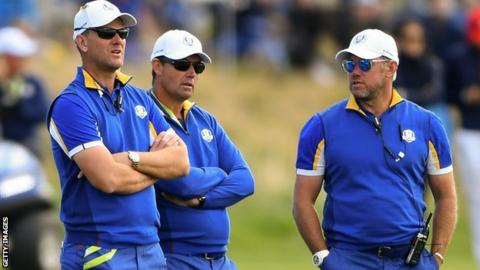
Europe captain Padraig Harrington has selected Robert Karlsson as his first vice-captain for next year’s Ryder Cup in Wisconsin.
Karlsson, 50, continues in the role after assisting Thomas Bjorn as Europe beat the USA 17½-10½ to regain the trophy in Paris last year.
“Anybody involved in 2018 would have seen this as a no-brainer pick,” said Harrington, 48.
“He’s very logical, very straight, he doesn’t let the emotions get involved.”
Karlsson made two appearances in the Ryder Cup as a player, helping Europe to victory at the K Club in 2006 and playing in the defeat at Valhalla in 2008.
“It’s fantastic,” said the Swede.
“Padraig asked me a little while ago and I am really looking forward to this process and being part of a team again and helping Padraig along the way.”
The 2020 Ryder Cup will be played at Whistling Straits Golf Club in Wisconsin, United States from 25-27 September 2020.