Room: Guide 1
Binary Options
Guide Banner (en) nico
Technical Indicators (en) nico
- Pay $45 to bet that the price of gold will be above $1,250 at 1:30 p.m. today. Get $100 ($55 profit) if you win, lose $45 otherwise.
- Receive $81 now to bet that NASDAQ US Tech 100 index will go below $2,224 at 2 p.m. today. Keep a profit of $81 if your prediction comes true. If it does not, lose $19.
- Pay $77 to win $100 if the USD-JPY forex rate goes above 78.06 at 2 p.m. today; you lose $77 if it does not.
- Gain $33 if you bet on the price of bitcoin will go below $379.5 at 3:00 p.m. today. If it doesn’t drop that much, lose $67.
Welcome to binary options. All or nothing, one or zero, these securities are available on Nadex and the Chicago Board Options Exchange (CBOE). Binary options allow traders to make time-bound conditional bets on predefined values of stock indices, forex, commodities, events, and even bitcoin values. Like a standard exchange-traded option, each binary option has an option premium ($45, $81, $77, and $33 in the examples above), a pre-determined strike price ($1,250, $2,244, 78.06, $379.5), and an expiry (1:30 p.m., 2 p.m., 3 p.m. today).
The differentiator is the settlement price that remains fixed at $0 or $100, depending on the option condition being fulfilled. It keeps the net profit (or loss) fixed. The option premium also remains between $0 and $100. (Related: Guide to trading binary options)
Since binary options are time-bound and condition-based, probability calculations play an important part in valuing these options. It all boils down to “what is the probability that current gold price of $1,220 will move to $1,250 or above in the next four hours?“ The determining factors include:
- Volatility (how much and is it sufficient to cross the threshold/strike price?),
- Direction of the price move, and
- Timing.
Technical indicators suitable for binary options trading should incorporate the above factors. One can take a binary option position based on spotting continued momentum or trend reversal patterns. Let’s look at some of the popular binary option technical indicators:
- Wilder’s Directional Movement Indicators (DMI) Average Directional Index (ADX): Composed of three lines, namely ADX, DI+, and DI-, and their relative positions, this indicator aims to capture the strength of an already identified trend. Here is the table for interpreting the trends:
| Position | Momentum | ADX Value > 25 | ADX Value < 25 |
| DI+ above DI- | Indicates Uptrend | Strong Uptrend | Weak, Unsustainable Uptrend |
| DI- above DI+ | Indicates Downtrend | Strong Downtrend | Weak, Unsustainable Downtrend |
Here is an illustration, using 3M Company (MMM) stock:
Depending upon the identified momentum and trend strength, an appropriate buy/sell position could be taken.
- Pivot Point (in conjunction with support and resistance levels): Pivot point analysis helps determine trends and directions for any given timeframe. Because of the flexibility in timing, pivot points can be used for binary options, particularly for trading highly liquid major currencies. A good example (with calculation and graphs) is included in the article Using Pivot Points in Forex Trading.
- Commodity Channel Index (CCI): The CCI calculates the current price level of a security relative to the average price during any given timeframe. The average price level is usually the moving average. Time periods can be selected as desired, allowing the trader flexibility in choosing when a binary option expires. The CCI is useful in identifying new trends and extreme conditions of overbought/oversold securities. It is very popular among day traders for short-term trading and may be used with additional indicators such as oscillators. The CCI is computed with the formula:
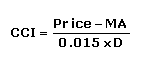
“Price” is the asset’s current price, “MA” is the moving average of the asset’s price, and “D” is the normal deviation from that average.
High values above +100 indicate the start of a strong uptrend. While values below -100 indicate the start of a strong downtrend.
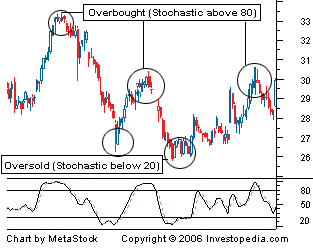
- Stochastic Oscillator: In an interview, the creator of the Stochastic Oscillator, Dr. George Lane, said “it follows the speed or the momentum of price. As a rule, the momentum changes direction before price.” This important underlying detail indicates extreme cases of overbuying and overselling, allowing reversals for bullish and bearish phases to be identified.
The crossover of %K and %D values indicate trade entry signals. Although a 14-day period is standard, binary option traders can use their own desired timeframes.

Levels above 80 indicate overbought, while those below 20 indicate oversold.
- Bollinger Bands: Bollinger bands capture an important aspect of volatility. They identify upper and lower levels as dynamically generated bands based on recent price moves of a security.

Commonly followed values are 12 for simple moving average and two for a standard deviation for top and bottom bands.
Contraction and expansion of the bands indicate reversal signals that help traders take appropriate positions in binary options. Overbought situations are indicated if the current market price (CMP) is above the top band. While overselling is indicated when the CMP is lower than the lower band.
A challenge in binary option trading is correctly predicting the sustainability of a trend over a given period. For example, a trader may take the right position for an index, predicting it would hit 1250 at the end of a five-hour period, but the level was achieved in the first two hours. Constant monitoring is needed for the rest of the three hours if the trader plans to hold the position until expiry, or a predetermined strategy should be executed (like squaring off the position) once the level is reached.
The Bottom Line:
The technical indicators discussed above should be used for timely actions with constant monitoring. One major disadvantage with technical indicators is that the results and calculations are based on past data and can generate false signals. Traders should practice caution with detailed backtesting and thorough analysis for high-risk, high-return assets like binary options.
Binary Option (en) Demo nico
A Guide To Demo Accounts
‘Try before you buy’ is a concept we’re all familiar with – both on and offline. When it comes to trading sites, this concept takes the form of the demo account; something that’s a feature of virtually all online binary options brokers you’ll come across.
From the broker’s point of view, this is their chance to ‘wow’ you with their platform and its multitude of features. It’s where they hope to earn your trust – or at the very least, to get hold of your email address.
Likewise, as a prospective binary options trader, the demo account gives you the opportunity to put the platform to the test. Does it work? Can you make sense of it? Does it feel right? These are the questions you need answers to before you hand over your cash.
Here, we take a close look at binary options demo accounts; how they can help you and what to look for as you decide whether to move on from the demo to the real deal…
Getting Started
Head on over to a broker’s website and the “Try it now” button (or something very similar) will feature prominently. The way most demos work is simple; the broker gives you a set amount of virtual money to play with ($1,000 is a popular figure). You then use this “money” to explore the platform; placing as many or as few trades as you wish. Losses and gains are credited to this virtual, dummy balance.
So is it always safe to sign up? At the very least, the process tends to involve submitting your email address and specifying a user name.
Download on Mobile Devices
If you intend to use the demo account app on a mobile device, it also usually involves downloading the company’s app. Bearing in mind that it’s never a good idea to hand over personal information blindly – or download software from an unknown party, it’s advisable to do your homework first.
What can you glean from independent reviews of the site? Where is it based? What do actual users have to say about it? Even though it’s just a demo, it’s still important to know that you’re in safe hands.
Be especially wary if the demo sign-up process takes the form of a data-mining exercise – i.e. if you are encouraged to provide large quantities of personal information. There really should be no need to provide bank account details at this stage; if the platform is requesting this and you are (rightly) uncomfortable with it, there are plenty of other platforms out there that don’t require this information – so consider looking elsewhere.
How To Use A Demo Account
At heart, binary options demo accounts provide the chance to test-drive the platform. So here are the areas to focus on as you put the platform through its paces…
Compare trading platforms without deposits
What you are looking for is a “full-fat” experience of this particular broker’s trading platform. If you eventually decide to use it as a tool for real life trading, it has to be a tool that’s comfortable to use. As such, it should ideally be fully representative of the live platform in terms of access to all features.
A demo account allows more than one platform to be compared. This is useful both for the novice trader, but also for more experienced users looking to ensure they are trading with the best provider. It is of course, possible to have accounts with different brokers to ensure the best payouts on specific assets and trades.
Demo trading account should match live platform
The idea behind most demo accounts is that you see the results of your simulated trading activity reflected in your virtual balance. For a true picture here, it’s important that the payout rates mirror those in real life. So for instance, on the live account, if the payout rate on a particular asset is 85%, it’s important that the same rate applies on the demo account, too. Likewise, if the live account features a returns slider, that slider should work in exactly the same way on the demo as on the real thing.
Is binary options trading for you?
As a novice in this area, you may be weighing up binary options alongside other forms of trading. As well as reading around the subject, signing up to no-deposit binary options demo accounts can be a useful method of hands-on research.
Exploring new asset classes
Let’s say you have only ever traded one or two asset types in the past (forex, for instance). Binary options demo accounts provide a risk-free environment to explore new areas. From indices through to commodities and individual shares, the demo should ideally provide access to all assets available on the live version, giving you scope to experiment.
Demo accounts as part of your education
Some brokers provide access to a wealth of educational and instructional resources – suitable for novices and more experienced traders alike. A range of brokers focus on user education, featuring an introduction programme, a range of seminars and various guides. The demo account is one of the best ways to find out whether you actually understand what you’ve been learning.
Likewise, if you are still honing a strategy, a demo account can be invaluable for putting it to the test. Consider it a ‘practice account’. IQ Option will even allow you to back test trading strategies on the demo account or even test robots in real time.
News and analysis: how does the alerts system stack up?
Many platform providers claim to be able to keep you in the loop – where ever you are. An alerts system can certainly be invaluable in keeping you up to date with changing market conditions and informing you of new opportunities. So the demo account lets you see just how useful such a service really is – as well as allowing you to test out the mobile-friendliness of the platform.
Apps
A growing segment of the demo account picture is for the full trading app experience to be available via a demo account app. The brokers who have taken the time to make this available, are more likely than not to have the better trading platforms – after all, they have gone to the extra effort of making sure as many people as possible see it.
Free Accounts – Check It Actually Is Free!
Some brokers will offer a demo account, and refer to it as “free” – but it actually requires a deposit in order to gain access. Given the benefits of a demo account, it might be worth paying a deposit, particularly if it is a brand you want to check out – but tread carefully. In some cases, the initial deposit can trigger a bonus, which may impact withdrawal limits. Where this is the case, the demo account is certainly not “free”.
In most cases, a demo account will not require a deposit. The broker should have enough faith in their platform that you will not look anywhere else after trying theirs. Those that impose restrictions (such as needing a deposit, or large amounts of sign up information) perhaps do not have as much confidence in their offering.
Demo Contests
Some brokers will promote competitions and contests among their demo users. This encourages traders to use the platform more, but also aids the broker in converting those demo account holders into real money users. These contests come in many guises but often carry real money rewards – another step in hoping traders make the move to real money.
These contests are just another marketing tool for the broker, but offer traders a good incentive to stay active. No deposit is required to enter so there is no risk for the trader – and they can be a lot of fun.
Finding the Best Accounts in Italy
A demo account should be a risk-free, no-obligation way of testing a platform. It can be especially useful for finding out whether the user experience described by the broker is all that it’s cracked up to be.
Ideally, you’ll do some homework on the broker before signing up to the demo (checking key areas such as whether it is regulated and whether the payout rates are competitive) to avoid wasting your time on a broker who might have a swish website but less than adequate service.
Finally, it’s worth noting that once you’ve signed up to a demo, access to it might be granted for a limited time only. So if you do sign up – don’t forget to make the most of it. The very best demo accounts are free, exactly the same as the real platforms, and not time limited.
Strategy (en) nico
I – Fundamental Analysis Strategy
This strategy is concerned with the analysis of the behavior of the overall performance or attributes of a company. As an investor or trader in binary options, you are interested in knowing about the health of the balance sheet, income statement and the cashflow statement of the company before you consider buying an option. The other factors that you should check out include the employee and the business partners’ satisfaction. In short, this strategy tries to look at the overall picture of the business they want to invest in their stock and at times the overall industry.
II – Technical Analysis Strategy
This is a quite popular strategy in options trading. It is mainly concerned with the study of the past, using different parameters such as charts in order to predict the future price of an asset. This method is not concerned with getting the intrinsic value of an asset. It’s quite useful in options trading because as a trader, you don’t have to delve into the company’s financial statements. Among the tools used in technical analysis include Bollinger bands and Moving Average among others.
III – Basic Options Strategy
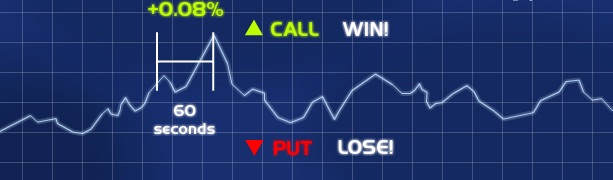
This strategy is quite popular among options traders. It is designed and employed by a trader to safeguard him/herself from incurring total losses on their investments. You will pick an underlying asset or currency that you are interested in and then if the market movement of the strike price is heading towards a good direction, say upwards, you place a call option. At the same time, you will place a put option on the same asset.
Let’s use an example:
The GBP/USD currency option is going at 1:4000. You place the call option of $100 which will expire in 30 minutes. The payout is 70% and 15% if you lose. In the first 15 minutes the asset is at 1:4015 which is good so far. At this specific time, you buy a put option for the same asset at 1:4015 expiring in 15 minutes at $100. The payouts are the same as those of the call option.
At the end of the 30 minutes there will be two outcomes;
- Your 30 minutes call option wins and the 15 minutes put option losses. You will have earned $185 from the 70% call winnings and the 15% consolation refund from the put option (the opposite can happen, put option wins and call option losses).
- Both the call and the put options end up in the money. You will get $340 ($170+$170). Since it’s almost impossible to lose on both options, the general risk of loss in this strategy is only $15 in order to win $140.
IV – Algorithmic and signals
There are apps which are sold and which are very good at trading or analyzing the market data. You might find it appropriate to invest in such an app. This app is installed in your computer and gathers data that you want and then analyzes it to come up with the best possible outcomes. Technical and fundamental analysis data are used here.
The computer will then pick a trade for you to trade in. You could even go ahead and design the app to be actually trading for you. You will however need to be regularly updating the raw data that the app picks its analyzing details from.
V – Co-integration Trading Strategy
There could be two stocks in the market that have a high correlation relationship. This could be because they are in the same industry and are traded in the same market, hence affected by many factors the same way. Given the high correlation between such a pair of stocks, you will find that whenever there is a gap between them it will close soon after. The gap can be caused by the weakening of one stock temporarily. The main task here is to identify the gap.
After identifying the gap, you should buy the call option for the stock that is weak or a put option for the asset if the stock higher in price is bound to come down. Eventually, the two assets will come to the correlation path and that should be the ‘point of exit’.
Final Word
Strategies, just like investment options, are many and you could end up with one which gives you consistent winnings. If you are a new trader, research well and identify the one strategy that best suits your trading portfolio and pattern. If you are a bit more experienced, you can create your own strategy or combine two existing ones to form a hybrid.
How to make money (en) nico
How Beginners Can Make Money
Even with so many ways to mess up, beginners to binary option trading can make money if they work hard and follow a system. The key to binary options trading is to control risk. A trader can never lose too much money on any particular trade. Hypothetically, a trader has a 50% chance of being correct on any trade whether they buy a call or a put option. To make money, a trader only needs to be correct on about 60% of trades of the trades that they take. This means that of the trades that a beginner with absolutely no edge (an edge is something giving a trader a better than random chance to make money) would take, they need to figure out how to turn about 20% of them into winning trades.
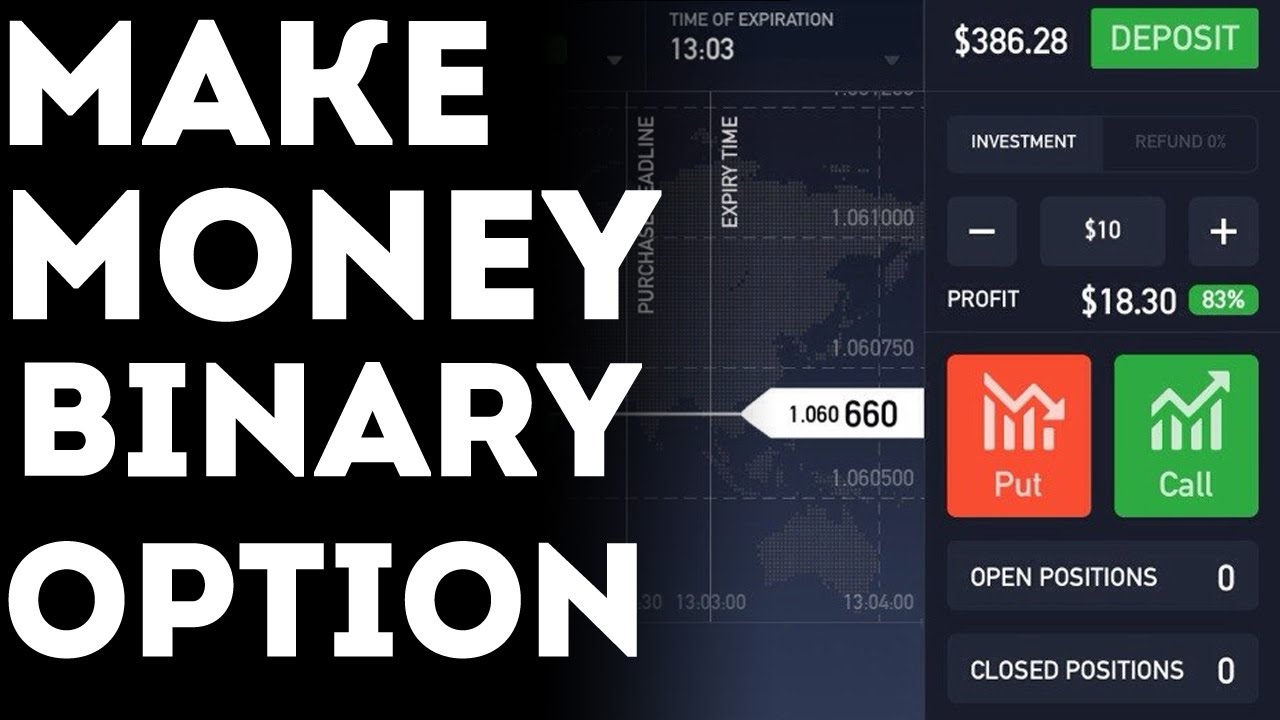
Binary Options – How Much Can You Make?: This is not a simple question. There are certainly traders who make a living with binary options. You could make thousands of dollars every month. However the best is if you start with lower expectations. Making hundreds of dollars steadily is a good way to start.
Here are possible ways that any beginner can easily do this:
- Use a signalling service. While most are not are not going to give a trader a significantly better than random chance of making money, they still should tilt the odds into the trader’s favor. This is all any trader can ask for.
- Learn to use technical indicators. Technical trading involves using strictly price action (price charts) to predict future movements. There are a lot of indicators out there, but some of the most common ones involve using moving averages. Examples of popular indicators are MACD, relative strength index, and bollinger bands. If you can find an indicator that works well for the security you are trading you can gain the edge you need in order to turn some of your would be losing trades into winners.
- Trade stocks before trading binary options. Stock trading is less volatile for a trader’s account than binary option trading as long as the trader does not use leverage and sticks to securities priced over $5. If you can figure out how to be correct on more than 50% of your stock trades, you can take what you learn and apply it to binary options to multiply your earnings power.
- Track your performance in each binary option security. Most people will be better at trading some stocks or commodities or currency pair than they are at others. The simplified reason for this is that each particular symbol will move differently than the others because each one has its own characteristics and traders involved in moving the price. If you find a handful of option trades that you are consistently profitable in, stick with what works and increase your size. You don’t need to waste your time and money on unprofitable trading.
- Buy the right option length for your trading style. Some trading styles will work better over very short term trades, and some will work better over trades held for a long time. Know your style and the appropriate length option you should buy. A value investor for instance would not be sensitive to price changes over a 1 minute option, but may be correct on a super high percentage of trades over a 6 month period.
What are binaries? (en) nico
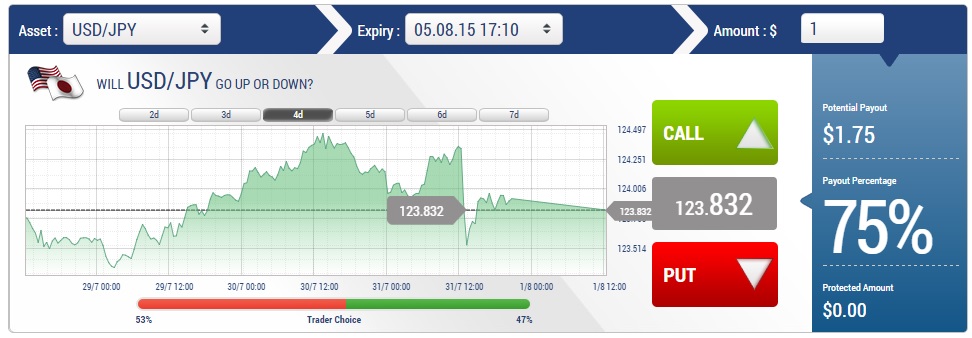
Binary options traded outside the U.S. are typically structured differently than binaries available on U.S. exchanges. When considering speculating or hedging, binary options are an alternative, but only if the trader fully understands the two potential outcomes of these “exotic options.”

U.S. Binary Options Explained
Binary options provide a way to trade markets with capped risk and capped profit potential, based on a ‘yes’ or ‘no’ proposition.
For example: Will the price of gold be above $1,250 at 1:30 p.m. today?
If you believe it will be, you buy the binary option. If think gold will be below $1,250 at 1:30 p.m., then you sell this binary option.
The price of a binary option is always between $0 and $100, and just like other financial markets, there is a bid and ask price.
The above binary may be trading at $42.50 (bid) and $44.50 (offer) at 1 p.m. If you buy the binary option right then you will pay $44.50, if you decide to sell right then you’ll sell at $42.50.
Let’s assume you decide to buy at $44.50. If at 1:30 p.m. the the price of gold is above $1,250, your option expires and it becomes worth $100. You make a profit of $100 – $44.50 = $55.50 (less fees). This is called being “in the money.”
But if the price of gold is below $1,250 at 1:30 p.m., the option expires at $0. Therefore you lose the $44.50 invested. This called “out of the money.”
The bid and offer fluctuate until the option expires. You can close your position at any time before expiry to lock in a profit or a reduce a loss (compared to letting it expire out of the money).

A Zero-sum Game
Eventually every option settles at $100 or $0; $100 if the binary option proposition is true, and $0 if it turns out to be false. Thus each binary option has a total value potential of $100, and it is a zero-sum game – what you make someone else loses, and what you lose someone else makes.
Each trader must put up the capital for their side of the trade. In the examples above, you purchased an option at $44.50, and someone sold you that option. Your maximum risk is $44.50 if the option settles at $0, therefore the trade costs you $44.50. The person who sold to you has a maximum risk of $55.50 if the option settles at $100 ($100 – $44.50 = $55.50).
A trader may purchase multiple contracts, if desired.
Another example: NASDAQ US Tech 100 index > $3,784 (11 a.m.).
The current bid and offer is $74.00 and $80.00, respectively. If you think the index will be above $3,784 at 11 a.m., you buy the binary option at $80 (or place a bid at a lower price and hope someone sells to you at that price). If you the think the index will be below $3,784 at that time, you sell at $74.00 (or place an offer above that price and hope someone buys it from you).
You decide to sell at $74.00, believing the index is going to fall below $3,784 (called the “strike price”) by 11 a.m. And if you really like the trade, you can sell (or buy) multiple contracts.
Figure 1 shows a trade to sell five contracts (“size”) at $74.00. The Nadex platform automatically calculates your maximum loss and gain when you create an order, called a “ticket.”