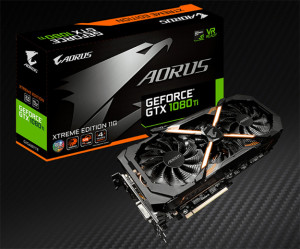
NVIDIA GTX 1080 Ti GARI

1080tiNVIDIA GTX 1080 Ti

The line of GPUs coming from Nvidia certainly has been experiencing some major upgrades. Just as everyone thought, the newer model that was supposed to come out came out on March 10th and it was priced at $699.00. The Nvidia Geforce GTX 1080 Ti certainly had everyone’s hopes up, and everyone seemed to receive the news of its release very well within the mining community. Of course, the test results as far as the performance goes seem to look very promising also.

This model happens to be one of the few to come from the Nvidia line to have the GDDR5X memory (where as the others of the same line are equipped with the more commonly used GDDR5). Fortunately for all of us, the GDDR5X standard is one that is able to support 10Gbit/s data rates, this is apparent by the way the GPU handles the mining tasks.

Mining Specs

Ethereum Hash Rate:

Power Consumption: 250W
Hash Rate: 27.72 MH/s

Power Usage with The Nvidia Geforce GTX 1080 Ti

As for the power usage of this GPU, the limit is 250W, according to the specs, when it comes to the non-synthetic operations. For those that are wanting to increase their power limit, there is also the option of the Founders Edition, and this will give the users a chance to increase the limit by 20%. Basically, that means that users who choose to go down that path will be seeing a limit that is 300W, of course, that would mean that more cooling would be needed as well.

The Nvidia Geforce GTX 1080 Ti is able to be underclocked. Unfortunately for users, there is no available data that is solid for underclocking at this time. However, the more experienced users out there have already stated that there is some potential with this one.
Cooling for The Nvidia Geforce GTX 1080 Ti

The Nvidia Geforce GTX 1080 Ti, unfortunately for users, only comes with one cooler so far. However, none has said anything bad in terms of cooling just yet. As of right now, everyone is recommending that users lock the fan speeds manually at 100%, so that they are able to stop thermal throttling.

The Performance

So far, users have all noticed that the Nvidia Geforce GTX 1080 Ti is not able to perform at equal rates for all of the algorithms, and this is because of the structure of the GPU and also because of the memory clock that is 11 GHz.
Final Thoughts on The NVIDIA GEFORCE GTX 1080 Ti

Because of the great amount of CUDA cores with the Nvidia Geforce GTX 1080 Ti, users are quickly realizing that this GPU certainly does have the ability to become one of the higher ranking for ETHand ZEC mining. Most will notice that the CPU is new and the drivers that are currently there now are probably very raw. There are some that believe that this model has the opportunity to be something great, and certainly will be if the release of new drivers will aid in getting over the problems that have been happening for the miner in terms of the mining algorithms.
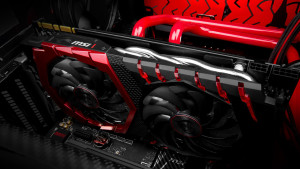
NVIDIA GeForce GTX 1070 Ti GARI

1070-ti

NVIDIA GeForce GTX 1070 Ti 

Cryptocurrency mining is one of the most widespread activities in the planet because of its profit-earning potential and the thrill you get when you obtain cryptocurrency, which will later go into your bank account in some way or another.

Not so long ago, cryptocurrency mining, especially Bitcoin mining, was performed on the Central Processing Units (CPU) of personal computers, and it was widely understood that with additional cores and faster speeds, people would get more money. But that system was later substituted, at least in popularity, by multi-graphic card systems that could help miners to find more hashes while optimizing the use of power.

NVIDIA’s newest toy for miners around the world

NVIDIA, an American technology brand, designs and produces graphics processing units, commonly known as GPU, for several fields, including cryptocurrency, gaming, and home use. It has been functioning since 1993. It also works on personal computers, mobile devices, and the automotive industry. NVIDIA is famous worldwide for its GeForce GPU series, which are commonly used for miners in their quest to add transactions to the blockchain and earn monetary rewards.

The GTX 1070 Ti comes to the market as a gaming GPU, although miners, naturally, have taken interest in its features and performance. It is visually attractive, with a colored LED logo and lights. According to some reviews, this card is very similar, if only marginally better, than the AMD RX Vega 64 and less than 10% better than the original GTX 1070 series, although we will talk more about that in a few minutes.

You will need more than your usual share of hardware to adapt your NVIDIA GTX 1070 Ti card: a motherboard such as the ASRock H81 PRO BTC, or the GIGABYTE GA-H110-D3A; an Intel Celeron G1840 for ASRock H81 PRO BTC CPU, or Intel Celeron G3900 for Gigabyte H110-D3A, at least 4 GB of DDR3, a SSD ADATA SU700 120GB, and an Add2PSU Multiple Power Supply Adapter, among other options.

The NVIDIA GeForce GTX 1070 Ti is an excellent graphics card for cryptominers all over the world. It has many interesting features, such as 512 more CUDA cores than the GeForce GTX 1070 while still implementing GDDR5 memory.

When mining Ether, the NVIDIA GeForce GTX 1080 isn’t as good as the cheaper GeForce GTX 1070, because speed and latency of the memory subsystem are deciding factors, and the latter comes up better in the comparison in spite of the former having GDDR5X.

More affordable than the competition, but not the best price

This new option in the market, the NVIDIA GeForce GTX 1070 Ti Founders Edition, can be obtained with $449, which isn’t considered terribly expensive if you consider that the NVIDIA GeForce GTX 1070 Founders Edition has a price of $399, and the NVIDIA GeForce GTX 1080 Ti FE costs $699.

Experiments have shown that the all-new NVIDIA GeForce GTX 1070 Ti with 432 CUDA Cores and 8GB of GDDR5 memory at 8Gbps is faster for Ethereum mining than, say, the GeForce GTX 1070. However, the margin is awfully small (only 0.2 MH/s), so the additional CUDA cores don’t heavily affect the performance. Let’s remember that both cards have equal bandwidth (256 GB/sec.)

The memory subsystem performance showed that some of the GeForce GTX 1070/1070 Ti cards stayed at 2000 MHz when mining, while others dropped to the 1900 MHz range. The problem seems to be present only for mining because other 3D applications didn’t drop the memory clock. However, manually overclocking the memory to the maximum level will get the best from the card anyway, so you don’t have to worry so much about this little issue.

On an overclocked 1070 Ti card, you will get close to 31 MH/s in performance, which represents roughly a 10% jump in production when compared to the EVGA GeForce GTX 1070 Ti FTW2. With the latter, the Graphics Processing Unit (GPU) was at 65C after mining for nearly nine hours in the open air, at approximately 634 RPM.

Both video cards, the EVGA GeForce GTX 1070 Ti FTW2 and the NVIDIA GeForce GTX 1070 Ti Founders Edition, are very similar in performance and power consumption, but since the former is $50 more expensive than the latter, then the decision is a lot easier for miners.

The NVIDIA GeForce GTX 1070 series cards give users better value for their price

However, the elite are still the NVIDIA GeForce GTX 1070 series cards. It offers miners some of the best features and performance in the market while costing just $379. With them, you could reach 33 MH/s by overclocking, a number that either the EVGA GeForce GTX 1070 Ti FTW2 and the NVIDIA GeForce GTX 1070 Ti Founders Edition could reach. In spite of having extra CUDA cores, the 1070 Ti aren’t particularly better for Ethereum miners.

In conclusion, while the NVIDIA GeForce GTX 1070 Ti has many interesting features that set it apart from its peers, evidence still suggests that the NVIDIA GeForce GTX 1070 series cards are better and more suitable for mining Ethereum, because, among many other things, it achieves better performance while using similar amounts of energy and power.

There is no denying that the NVIDIA GeForce GTX 1070 Ti has many positive traits. It has an excellent cooling system, it has mosfets and capacitors that make it durable and stable, it has even further overclock potential, it is silent and convenient for many environments, and is stylish and good-looking. However, it may be better suited for gamers than it is for cryptominers, and can be sold as a card for gamers with no issues. When it is set on factory configuration, the NVIDIA GeForce GTX 1070 Ti has a disappointingly low hash rate, and if you take in consideration the price, you can say it is good, but not top-notch.

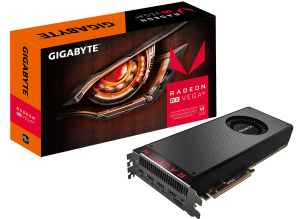
AMD RX VEGA 56 GARI

vega 56The biggest quest for Ethereum miners is undoubtedly the search for a great GPU for their mining rig. There are a lot of options to choose from, and the sad fact that the GPU that comes in most computers by default just won’t do.
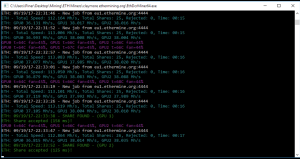
MINING SPECS

ETH Hashpower:

  • Power: 306 Watt
  • Hash Rate: 32.4 MH/s

ETH Hashpower (Vega 64 Flash Mod)

  • Power: 130 Watt
  • Hash Rate: 43.50 MH/s

*Not confirmed, not tested only theory.

ETH Hashpower (modded in Bios, Blockchain Drivers)

*Claymore tested, by us, with more than 3 cards

  • Power: 160 Watt
  • Hash Rate: 38 MH/s

ETH Hashpower (dual mining NiceHash)

*Claymore tested, by us, with more than 3 cards

  • Power: 160 Watt
  • Hash Rate: 32 MH/s

ZEC Hashpower (modded in Bios, Blockchain Drivers)

*Claymore tested, by us, with more than 3 cards

  • Power: 140 Watt
  • Hash Rate: 420 Sol/smh ethAMD has started to acknowledge Ethereum miners with its latest line of Vega GPUs.One of the most well documents problems with AMD’s Radeon Rx Vega 64 is the supply issue. Regardless. it is hardly the only AMD card available, amd a less powerful card was announced that gave users hope for access to a new GPU. The Radeon RX Vega 56 was sold out almost as soon as it hit the shelves.Amazon had been selling the XFX and the Sapphire Vega 56 although they were quickly sold out. Gamers desperate for a new GPU and others hoping to deplete the supply and sell for a higher price after create the demand made this happen. Both the XFX and the Vega 56 sold at $399.99. The cards also went out of stock on Newegg and Ebay.Best Buy had the XFX Vega 56 listed at $499,99, which is $100 over the MSRP. It is sold out there, as well.
    AMD said that it is working hard to meet the supply demand for these two cards, just as the company said it was doing with the Vega 64. AMD said that it is working with its supply partners to get more of the cards stocked as quickly as they can.The Vega 56 looks to be quite promising for gamers, and benchmark tests implied that it would be a viable alternative to the Nvidia GeForce GTX 1070. The card is also being looked upon with hope from Ethereum miners, and AMD has released new drivers intended specifically for mining. These drivers will amp up the performance of Vega10 GPUs. The Vega 56 shows a consistent 36.48 MH/s when the memory was clocked to 1900MHz.

    Pros and Cons

    38.48 MH/s isn’t very high, but it is still the best for 130W of consumption. The memory clock speed is promising, especially when overclocked. However, this GPU isn’t perfect and using a fan or air conditioner will help to keep it cool. Remember that the fan isn’t a one stop solution to the health of your GPU. Regardless the cooling system it uses, operating in a cooled room will be healthier for your GPU than in a hot one.

    Final Thoughts on The AMD RX VEGA 56

    It may be hard to get your hands on the RX Vega 56, but if you do, would you really want it? There are better cards to get your hands on for around the same price tag, and it seems that AMD has been striking out a little bit with their cards and the use for mining. However, it is nice to see that AMD is looking out for miners with mining specific drivers. As an entry level mining GPU, the RX Vega 56 could work decently enough to get your feet wet in the mining industry.