APEX 1000 GARI

Release Date: 11th February 2019
Platform: Origin
Region: Worldwide
Language: English

apex1000

Gameplay

Apex Legends is a battle royale game borrowing concepts of the hero shooter, taking place 30 years after the events of Titanfall 2Apex differs from most battle royale games by incorporating Legends, pre-defined heroes with unique abilities that fall into roles such as Offense, Defense, Support and Recon. Players are grouped into squads of three, each player selecting a unique Legend in turn, and each match features up to 20 teams competing. All teams start with no equipment and are flown over the game’s map via dropships from a random direction from which they drop onto any spot on the map they can reach. Teams scour the game map for weapons, ammunition, and other equipment while fighting to be the last team standing, all while staying within an ever-shrinking safe zone on the map. A player can be downed into a vulnerable bleed-out state, leaving them only able to crawl for cover or reach a squadmate, who can revive them. If the player bleeds out, or an opponent uses a finisher move on them, they are then eliminated, dropping their equipment to be looted and a banner. The player can potentially be respawned if their squadmates recover this banner and take it to a Spawn Beacon, scattered on the map, in a limited amount of time. Apex features both voice-chat communication with squadmates and a contextual single-button communication approach that allows a player to ping map features like weapons, opponents, or rally points.

Apex Legends is free-to-play and supported through microtransactions for cosmetic items and heroes. New cosmetic items can be earned from opening Apex Packs, the game’s version of loot boxes that contain a random assortment of rewards, or spending the in-game currency Crafting Materials, which are gained through Apex Packs. Apex Packs are freely earned as the player gains experience levels. Additionally, players freely gain Legend Tokens for playing matches as well as for leveling, which are used to unlock new Legends and certain cosmetic items. A final currency, Apex Coins, is bought with real-world funds and can be used to buy Apex Packs, unlock Legends, or purchase specific cosmetics. Respawn plans to offer battle passes in the game’s future which reward players with new seasonal cosmetic items by completing in-game challenges.

Characters

The game currently has 8 playable characters, each with 3 unique abilities.

  • Wraith who is a interdimensional skirmisher.
  • Bangalore who is a professional soldier.
  • Pathfinder who is a forward scout.
  • Lifeline who is a combat medic.
  • Gibraltar who is a shielded fortress.
  • Bloodhound who is a technological tracker.
  • Caustic who is a toxic trapper.
  • Mirage who is a holographic trickster.

Mirage and Caustic are not available to new players right away. They must be unlocked with either in game credit (purchased in the store) or by playing many games and getting enough XP to purchase them.

Resident Evil 2 / Biohazard RE:2 PC + DLC CD KEYS GARI

Release Date: 25th January 2019
Platform: Steam
Region: Worldwide
Language: English, English-US, French, German, Italian, Japanese, Korean, Spanish

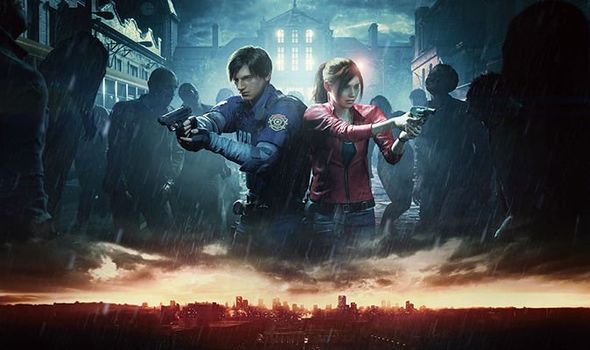
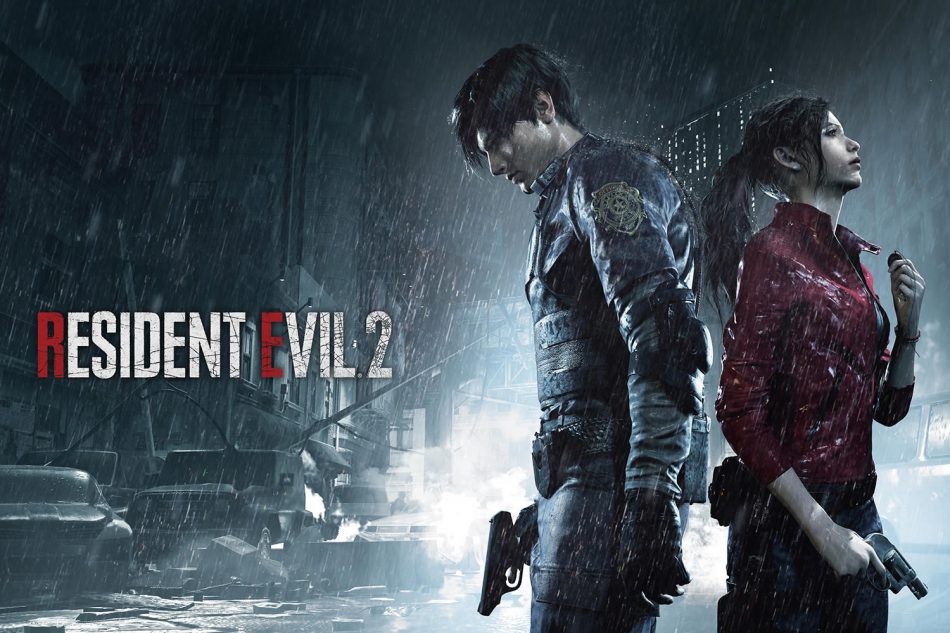
I have fond memories of playing the original Resident Evil 2 in my dorm room at the University of Kansas back in 1998 and thinking the CGI cutscenes looked incredibly realistic. (Oh, 1998 Daemon, you had so much to learn!) Another great gaming recollection of mine is playing the 2002 remake of the first Resident Evil on GameCube with its beautifully updated visuals, completely new areas to explore, and terrifying new enemies. Now, in 2019, Capcom has given me a new experience I’ll remember for a long time: this ground-up remake of Resident Evil 2 is a very fun, very creepy adventure thanks to its completely new and modern graphics, controls, and some smart quality-of-life improvements. The two playable characters’ stories aren’t as different as I’d hoped, but I enjoyed nearly every gory minute of my return to Leon Kennedy and Claire Redfield’s shoes.

I hadn’t played the original Resident Evil 2 since its release 20 years ago and only remembered the broadest of strokes: I knew it largely took place in a police station, the Lickers were introduced, and the giant spiders in the sewers were a nightmare. If a similar amount of time has passed for you, or if you’ve never played it, it might not be apparent what an enormous improvement this remake is unless you look at it side-by-side with the original. That’s because instead of the usual remastering treatment where we see upgraded resolution and textures hung over an old game’s skeleton, here Capcom started from scratch and remade the whole thing using the RE Engine, which is the tech that powered Resident Evil 7.

These are the best-looking zombies I’ve ever seen in a game.

Now, instead of pixelated characters running from pre-rendered background to pre-rendered background, Resident Evil 2 is a fully 3D, over-the-shoulder affair with atmospheric lighting effects, impressive facial animations, and the best-looking zombies I’ve ever seen in a game. They’re juicier than ever (I’d venture a guess the designers were heavily inspired by the Tarman from Return of the Living Dead) and I love the way they lurch around and react when you blow off very specific chunks of their heads and hands courtesy of the satisfyingly detailed dismemberment system.

Capcom does noticeably reuse the same handful of zombie models, though. Especially later on in the story, you’ll likely recognize the same undead faces you blew off way back at the police station.

Resident-Evil-2-Remake-1065788

Some events have been rearranged or expanded upon and there are some surprising twists I didn’t remember, but this is a mostly loyal remake of the suitably dark and twisted story of Resident Evil 2. It’s two months after the zombie outbreak of the first Resident Evil, which took place mostly in a spooky mansion. The horror has now overrun the entirety of Raccoon City, which is divided into three large areas that serve as the story’s acts. Exploring its dark hallways, solving puzzles, and hoping to god there isn’t a zombie around the next corner all remains fun today. Charting each area, learning the lay of the land, and eventually overcoming the obstacles in your way really never gets old. There are statues with hidden compartments everywhere, mutated reptiles stalk the sewers, and there’s a vast scientific lab buried underground. None of it holds up against much scrutiny, but they’re all fun places to explore.

Our heroes Leon and Claire, meanwhile, have strolled into town at a really bad time and are almost immediately separated. The pair is likable enough but two dimensional in their unwavering heroism. They never have a moment of despair or self doubt, and that makes them a bit dull, whereas a couple of the side characters are more charismatic and interesting. The mysterious Ada Wong in Leon’s campaign keeps you questioning her motives and wondering whose side she’s really on, for example.

This is real survival horror, where it always seems like you’re just barely scraping by.

Crucially, inventory and ammunition management is still a key part of Resident Evil 2’s gameplay. This is real survival horror, where it always seems like you’re just barely scraping by with enough ammo and healing items. You can’t carry everything you find with you, so what you should store and what you should carry is a battle constantly being waged in your mind.

Those quality-of-life improvements I mentioned include automatically updating your maps to let you know if a room has been cleared of items or if you missed something, frequent and unlimited save points, and freedom from the infamous barrage of loading screens. All of those are very much appreciated when exploring Raccoon City.

Tension has been elevated by the excellent sound design. Very little music accompanies gameplay, which leaves plenty of room for creaking doors, thunder and rain, the moans of the undead somewhere just out of sight, and heavy footsteps of something sinister in the next room over. Resident Evil 2 gets atmosphere like nobody’s business.

10596_Resident_Evil_2_MAIN_8bd79736ec3d249e9007668fe2ffd5b7
Leon and Claire take extremely similar paths.

I beat the story from Leon’s point of view in eight hours, which felt a little short, but I was excited to fire up Claire’s campaign and see the fateful evening’s events unfold from an entirely new perspective. Unfortunately, whomever you play as in the main game mode, Resident Evil 2 will be largely the same when you finish and switch to the other person’s 2nd Game mode. While there are a handful of new locations, many quest items are shuffled to new locations so you need to hunt for them again, and you’ll see more and deadlier enemies sooner in the campaign, most of the same events happen. Leon and Claire take extremely similar paths, meet most of the same people, solve most of the same puzzles, and fight most of the same bosses the other one did the first time through.

(In an earlier version of this review I mistakenly played through the first versions of Leon and Claire’s stories back to back, which are even more similar. Having now played Leon’s 2nd Game, I’m still disappointed that there’s only marginally more new things to see and do there.)

Their play styles aren’t entirely identical, at least: If you play as Leon first you may get used to dispatching enemies with his shotgun and flame thrower, and when you return as Claire you’ll have to learn how to adapt your playstyle and make do with a submachine gun and grenade launcher. Plus, each hero meets a unique, important person who causes them to deviate from the shared path for a short time, and there’s a different final boss fight at the end. I enjoyed all of it, though the repetition of so much content made it significantly less entertaining the second time through. Those small differences aren’t quite enough to justify a second playthrough of a very similar campaign.

As much as Capcom added to Resident Evil 2, a couple things are noticeably missing. Those giant spiders I remembered being terrified of? Not here. I was really looking forward to being scared by more realistic monster arachnids. (At least this is good news for arachnophobes who’ve missed out on Resident Evil 2 up to this point.) Also, when you press start at the title screen, no cartoonishly scary voice says “Resident Evil!” Big miss.

The Verdict

Capcom did a fantastic job of resurrecting all the best parts of the classic Resident Evil 2 and making them look, sound, and play like a 2019 game. If you’re of the mind that the series had lost its way for a while there, this game is very much a return to form. The zombie combat is satisfying and exploring the dilapidated ruins of Raccoon City is a thrill. The one big letdown is that the two characters’ stories aren’t different enough to make the second playthrough as rewarding as the first, even after unlocking the 2nd Game mode. But whichever you choose to play as, the experience of playing through the new Resident Evil 2 for the first time establishes a new standard for remaking classic games.

FIFA 19 PC (EN) CD KEYS GARI

What are the system requirements for FIFA 19?

MINIMUM for FIFA 19 on PC

  • OSWindows 7/8.1/10 – 64-Bit
  • CPUIntel Core i3-2100 @ 3.1GHz or AMD Phenom II X4 965 @ 3.4 GHz
  • RAM8GB
  • Hard Drive Space Required50.0 GB
  • Minimum Supported Video CardsNVIDIA GTX 460 1GB or AMD Radeon R7 260
  • DirectX11.0

RECOMMENDED for FIFA 19 on PC

  • OSWindows 10 – 64-Bi
  • CPUIntel i3 6300T or AMD Athlon X4 870K or equivalent benchmark. Intel i3 4340, Intel i3 4350, AMD FX-4350 and FX-4330 as alternatives
  • RAM8GB
  • Hard Drive Space Required50.0 GB
  • Minimum Supported Video CardsNVIDIA GeForce GTX 670 or AMD Radeon R9 270X
  • DirectX12.0

Release Date: 27th September 2018
Platform: Origin
Region: Worldwide
Language: English, English-US

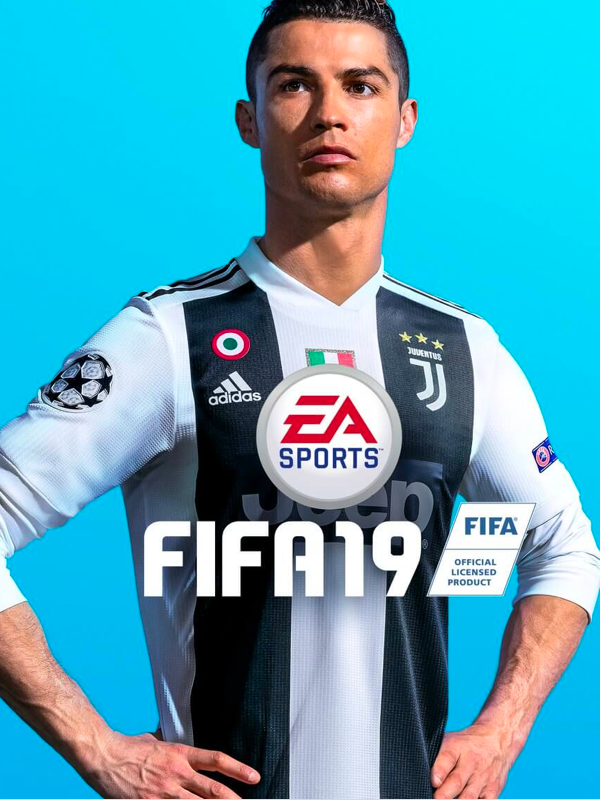
FIFA’s foundation has always been based on two things: presenting a fun, free-scoring game of football and unparalleled authenticity. FIFA 19 takes a small step forward in terms of the former, adding a handful of gameplay tweaks that refine the well-trodden FIFA formula rather than reinvent it in any significant way, but a huge stride forward with the latter, thanks to the inclusion of the Champions League.

FIFA 19’s gameplay innovation is precision ball control which, when used effectively, creates new openings through subtle movements, body feints and fancy flicks. But for every slick piece of control there is an equal moment of miscontrol as the ball gets away from you. It’s unforgiving at first, resulting in untidy passages of play with balls bouncing off the knees, chests, and heads of supposed top-class professionals. However, once mastered, the free-flowing football (using the right analogue to lead the ball away from you first time) creates some of the game’s most eye-catching moments. Letting the ball run across your body or flicking the ball before hitting a first-time shot adds a new level of satisfaction to attacking play.
FIFA 19

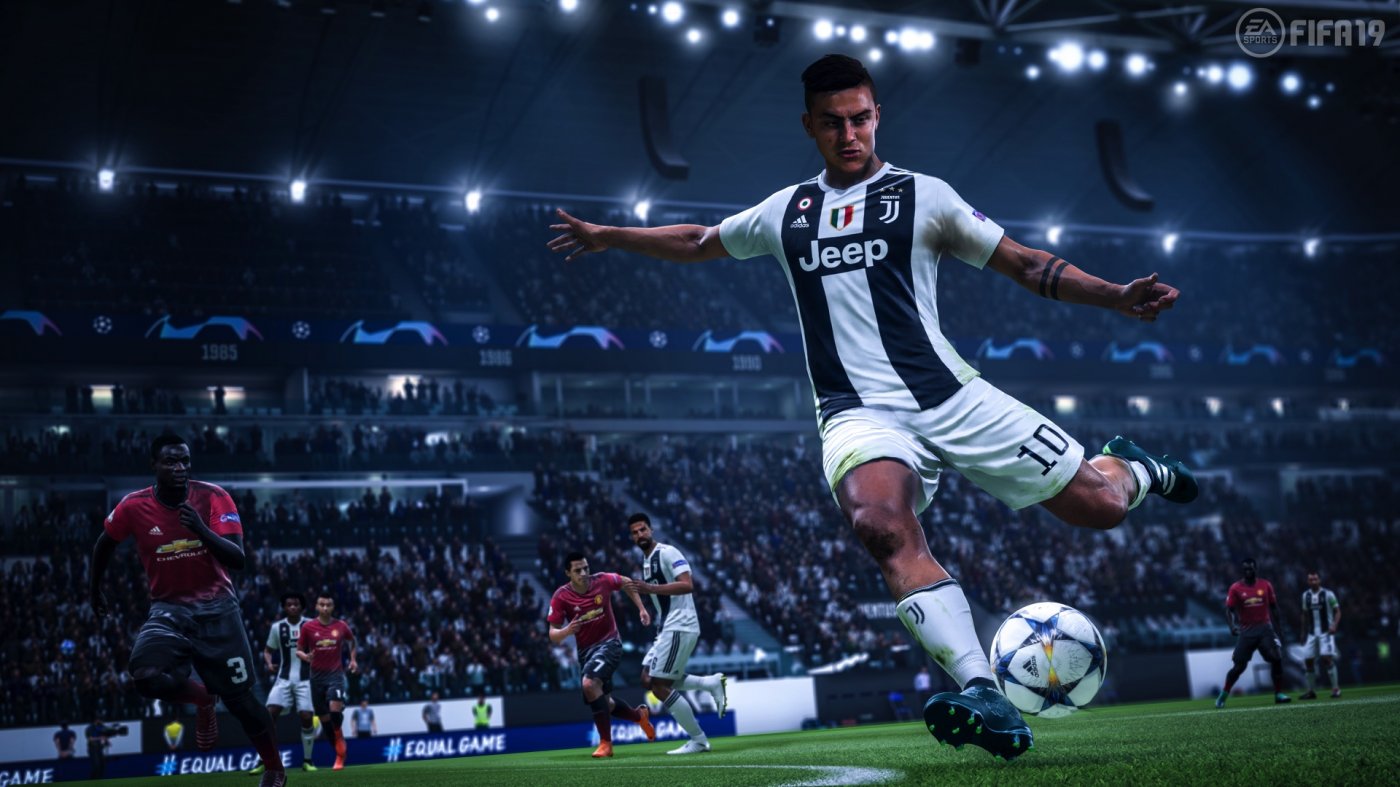
Flicking the ball before hitting a first-time shot adds a new level of satisfaction to attacking play.

Similarly, there’s an extra layer to finishing that works much like Gears of War’s active reload mechanic to add a level of risk to any potential goal threat. It’s activated by pressing shoot a second time after powering up a shot, in time with when the player strikes the ball. Get it right and the shot will fizz like a rocket, and although it doesn’t necessarily guarantee a goal it certainly improves your odds. However, get it slightly wrong and the player embarrassingly fumbles the shot. Overall, my experimentation with this system left me feeling that the reward didn’t justify the risk when shooting the traditional way still works so well.

There is welcome authenticity to the way 50/50 battles are now decided, taking into account both of the timing of a tackle and the attributes of the players involved. Consistently coming out second best against stronger opposition can be frustrating, but that reflects real life with greater accuracy than in previous editions. It’s definitely an improvement on the old system because I was able to judge whether to challenge for a loose ball to a better extent.

Elsewhere, passing accuracy is a lot less automatic. While the resulting imprecision takes some getting used to, it’s a rewarding and welcome improvement over the laser-precision passes of FIFA 18. Pace is no longer as easy a route to goal and even a player as quick as Leroy Sané will need to check back on occasion when a chasing fullback catches up to him.

This puts more emphasis on finding and using space properly, rather than relying on a player with 96 sprint speed to glide pass defenders and win you matches. Strength is also now a much more useful tool for winning and keeping possession of the ball, but as a result the agility stat feels slightly sidelined, with some players resembling a Sherman tank when performing tight turns. This slower pace results in a much more robust game of football and, ultimately, a much more authentic one befitting of FIFA 19’s lavish presentation.

The fidelity of that presentation has long been FIFA’s calling card and the addition of the Champions League is welcome, taking away the one licensing bragging right Pro Evolution Soccer always had over perennial rival. All of the pomp and circumstance of Europe’s premier club competition is present and correct. From the instantly recognisable introduction music to the graphic overlays used throughout the season, every aspect of the tournament is recreated perfectly. The level of detail is outstanding and I found myself constantly impressed by how accurate each match setting was.

That authenticity goes beyond the Champions League, too – there are 16 new La Liga stadiums, along with carefully reproduced atmospheres that fill them with life. Each venue genuinely feels different and makes each match a fresh, enjoyable experience. Such is the endeavour of EA’s design team to recreate some of football’s most iconic arenas that they even have managed to fully build Tottenham Hotspur’s new stadium before construction on the real thing has been completed in North London.

Each venue genuinely feels different and makes each match a fresh, enjoyable experience.

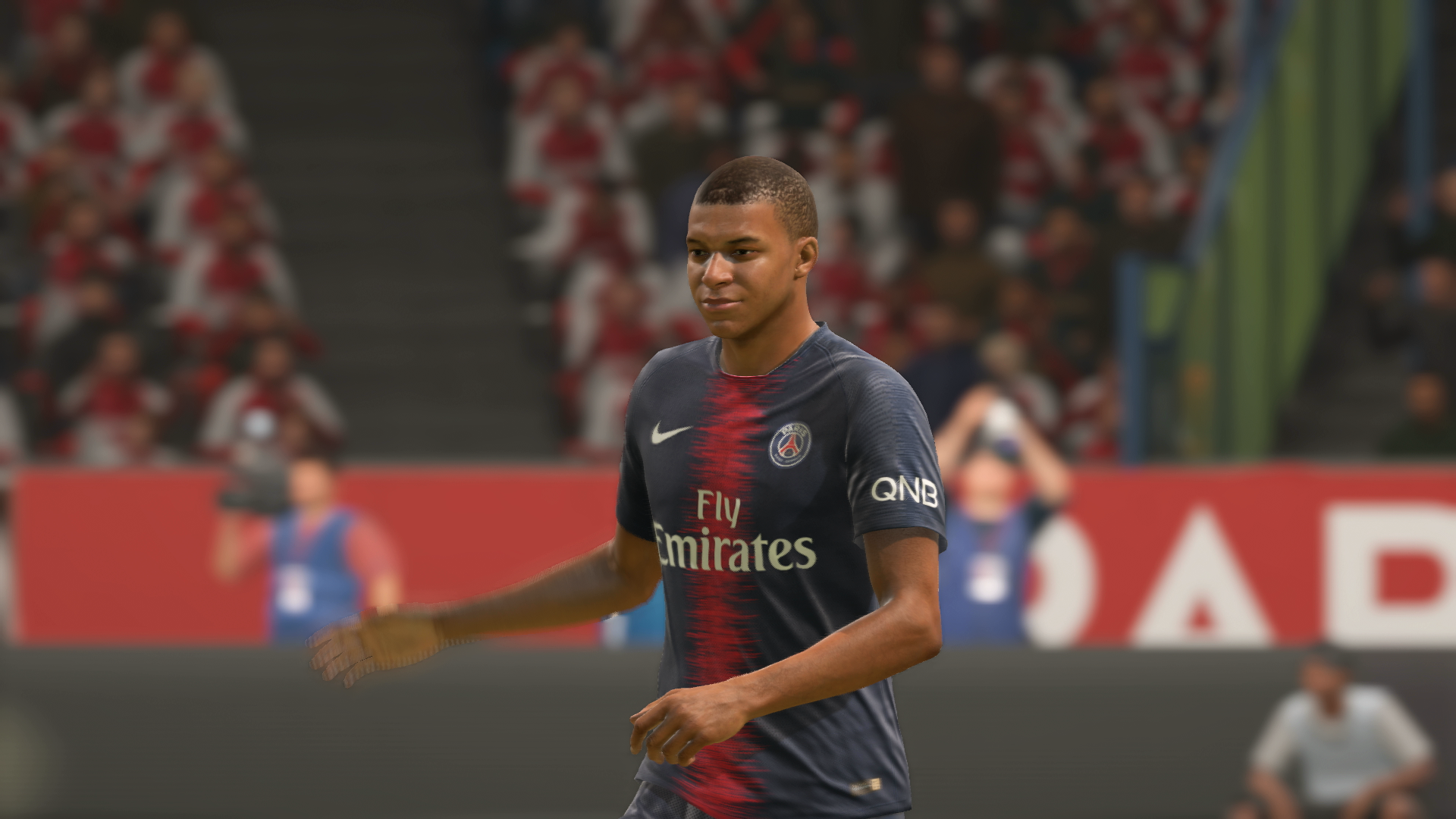
The players inside the grounds look better than ever also: little details, like beads on sweat on players’ foreheads or the slight rustle of their shirt sleeves on a windy day, add to the atmosphere. They move more fluidly than ever, appearing to sense and react to the ball and the players around them. Defenders will back into opposition forwards to shepherd a ball out of play and will attempt new ways to trap the ball if it comes to them at an awkward angle, making them feel more human as they more naturally adjust to each situation they find themselves in. Players appear to tire slightly more as games go on as well, adding to the realism.
FIFA-19-mbappe-hed

The UEFA competitions also bring with them two new commentators, Derek Rae and Lee Dixon. Although neither will give much of a tactical insight, it is always a bonus to have an extra pair of voices as an alternative to Alan Smith’s monotone drawl. The new licenses have been woven into every game mode possible too: the Champions League (and its little brother, the Europa League) can be played as part of the career mode, with former also found in the Kick-Off menu, with each stage available to play separately. Integration with Ultimate Team in the form of live content updates is promised, but at this stage it is unclear whether this will be any more than some in-form FUT cards.

FIFA’s Kick-Off mode has been long stagnant, offering little other than standard exhibition matches, but this year it has undergone a substantial overhaul with nine new game modes available. The most memorable can be found in the House Rules section, which is FIFA’s answer to Overwatch’s Arcade. These match types introduce new rule subsets to the core 90-minute match experience and do so to varying levels of success. Some are ripped straight from the playground, such as my beloved Headers & Volleys, while others bring a more anarchic edge to the beautiful game, like No Rules mode. With no offsides, fouls, or bookings enabled, this quickly descends into chaos and there’s no denying it’s a whole lot of fun.

Latching onto the current battle royale zeitgeist, the most enjoyable of these new additions is Survival Mode. In short, it consists of players being randomly ejected from your team after you score a goal, theoretically giving the trailing team the advantage. The different tactical approaches you can take to these matches due to its evolving nature give it much more depth than others. Going attack heavy at the beginning leaves you at a disadvantage later on, with reduced numbers and dwindling stamina all having an effect. Should you play it safe and try to nick a goal at the end, thus keeping all 11 players on the field as long as possible? I played numerous matches against both other players and the CPU and did not find myself tiring of it at all.
fifa19_timedfinishing_gen4_jpg_1400x0_q85

House Rules is a welcome breath of fresh air that contrasts against what the traditional matches continue to do so well.

These new modes go some way to restoring some of the quirkiness that has since diminished over the two decades since FIFA ’97 briefly introduced indoor football. House Rules is a welcome breath of fresh air that contrasts against what the traditional matches continue to do so well. True, it’s unlikely many of the modes will hold much appeal in the months after release, especially because they’re exclusively (and bafflingly) available offline, but they’re a welcome addition, especially considering both Career Mode and Pro Clubs remain virtually untouched.

Ultimate Team, is also fairly unchanged this time around, controversial microtransactions included. The only addition of note is Division Rivals, a mode that allows you to compete against others of an equivalent skill level for weekly rewards. It provides more structure to how best spend your time in FUT, but doesn’t really add a great deal. The Journey returns once again, now in its third (and final?) year of Alex Hunter’s story, with a 16 hour campaign that’s more soap opera, than Sopranos.

The Journey: Champions tells three separate storylines – one for each of the three protagonists – as they tackle their own challenges. Alex, the ‘Galactico,’ is adjusting to stardom in Madrid; his teenage sister Kim’s battling between being a World Cup star and finishing her schoolwork; and Danny Williams, a parody of a Premier League footballer who is at odds with the people that surround him. In particular, his estranged brother who is a twirly moustache away from being a pastiche of a 1920s Hollywood villain.

copertina_pre_order_fifa_19

This story – which can be played as one complete interwoven narrative or split into three separate threads – is bookended by some of the most compelling scenes in any of The Journey modes, but suffers from a second chapter that’s way too bloated and would have benefitted from fewer laborious training drills and post-match interview sequences, which are frankly painful to watch. I found myself crying out for some variety, and especially disappointed that none of the new House Rules modes found their way into the mix.

The Journey is a heavily scripted story hidden behind a thin veil of choice, both on and off the pitch.

Disappointingly, choices you make seem without consequence, with key decisions having little impact. One such choice I had to make was how “The Williams” should represent his new sponsor, a fictional fish and chip shop chain called McMillan’s. A photoshoot or a radio advert? It’s a so-called ‘monumental decision’ that I never saw any repercussions of along the way.

In truth, it’s a heavily scripted story hidden behind a thin veil of choice, both on and off the pitch. The start is promising but falls into the pitfalls of ox-bow lake-style storytelling. Ultimately everyone will play a very similar campaign resulting in a couple of different end scenarios and even having a poolside life lesson from Neymar feels like a slog.

The Verdict

With a plethora of new modes and some significant gameplay tweaks that make ball control more convincing, FIFA 19 is a distinct improvement upon last year’s effort. Not all of these additions hit the mark, however, such as the Gears of War-style shooting mechanic and a handful of the new Kick-Off modes. When coupled with an underbaked The Journey single-player campaign, those slow down its momentum a bit. That said, FIFA 19’s simply more fun than recent entries with a level of variety that should only increase its longevity.